
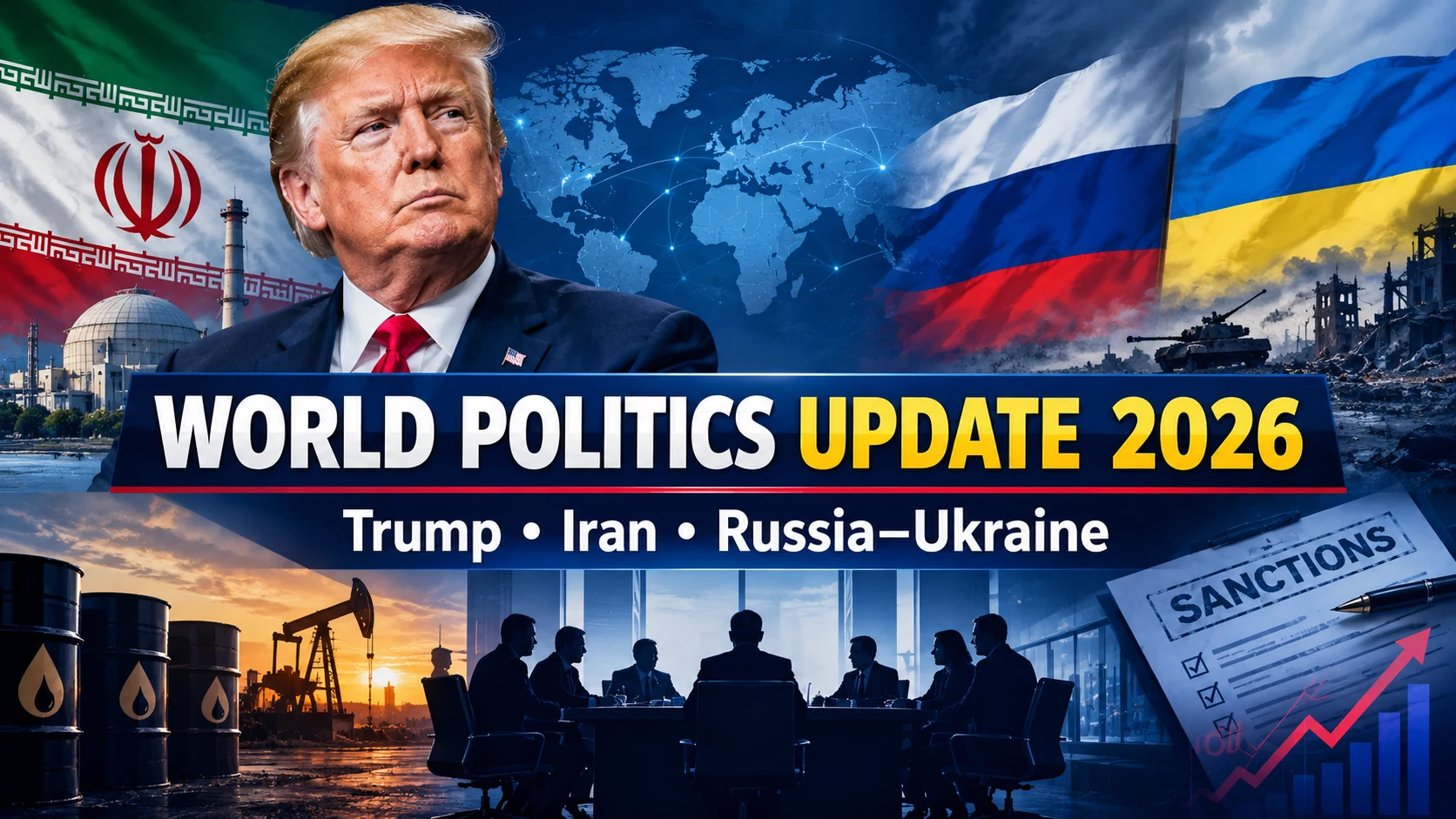
Latest world politics news: Trump’s Russia policy, Iran conflict, Ukraine war, sanctions, peace talks and global energy developments in October 2026.
Thank you for reading this post, don't forget to subscribe!Trump, Iran War and Russia-Ukraine Crisis: Latest Global Political Developments in October 2026
Introduction: Global Politics Faces Multiple Challenges
International politics remains focused on several interconnected developments involving US President Donald Trump, the conflict involving Iran, Russia’s war against Ukraine, economic sanctions, and global energy markets.
Recent reports have highlighted disagreements between Washington and Kyiv over sanctions against Russia, renewed attacks on Ukrainian infrastructure, and diplomatic contacts involving Moscow and Tehran.
These developments matter beyond the countries directly involved. Changes in military support, energy supplies, sanctions, and diplomatic negotiations can affect international security, oil prices, trade, and relations between major powers.
Here is a breakdown of the major developments reported in October 2026, based on available news reports and official statements.
1. Trump’s Russia-Ukraine Policy Faces Renewed Scrutiny
US policy toward Russia and Ukraine has become a major international political issue following several decisions by the Trump administration.
According to an Associated Press report published on October 20, relations between Washington and Kyiv had deteriorated amid disagreements over sanctions, Russian diesel purchases, military support, and negotiations to end the war.
Trump has also suggested that Ukraine should reach an agreement with Russia, while Ukrainian President Volodymyr Zelenskyy has continued to call for measures that pressure Moscow to stop its attacks.
The debate intensified after Trump delayed the implementation of sweeping sanctions targeting Russian officials, banks, and oil-shipping networks. Zelenskyy publicly urged support for the sanctions legislation, arguing that stronger pressure on Russia could help bring the war to an end.
The administration has cited US national interests in its decisions. Critics have questioned whether easing pressure on Moscow could weaken Ukraine’s negotiating position.
The practical consequences will depend on how Washington implements its policies and whether Russia and Ukraine make progress toward an agreed settlement.
2. Russia Continues Attacks on Ukrainian Infrastructure
Russia’s war against Ukraine remains a central security concern for Europe.
In a report published on October 23, Al Jazeera described Russian attacks involving cluster munitions and strikes on Ukrainian energy facilities. The report also covered Ukrainian claims of territorial gains during recent fighting.
Ukrainian officials said their forces had recovered territory in recent operations. The Institute for the Study of War, a Washington-based research organization that assesses battlefield developments using open-source information, also reported Ukrainian net territorial gains since September 1.
Battlefield claims should be interpreted carefully because the parties to the conflict have different accounts of territorial control and military losses.
Attacks on energy infrastructure are especially concerning as colder weather approaches. Damage to power stations and related facilities can disrupt electricity, heating, water supplies, and industrial activity.
For Ukraine, maintaining air defence systems, electricity supplies, and international military assistance remains important. For European governments, the conflict continues to raise questions about regional security, defence spending, and support for Kyiv.
3. Trump Announces an Energy Ceasefire, but Questions Remain
Trump announced an energy ceasefire between Russia and Ukraine in October, saying that both sides had agreed to stop attacks on energy infrastructure.
However, the announcement was followed by disagreement over the terms and whether both governments had formally accepted the arrangement.
In an October 11 report, TIME said Zelenskyy had indicated that the announcement was news to him. Ukrainian officials also reported continued Russian attacks on energy facilities.
Subsequent reporting described further strikes, adding uncertainty about whether the proposed arrangement was functioning in practice.
An announcement by one leader does not necessarily establish that a ceasefire is operational. Its implementation depends on agreed terms, compliance by the parties, and mechanisms for responding to alleged violations.
A durable agreement would require clarity about which facilities are protected, when the restrictions begin, and how violations are assessed.
4. Iran Conflict Keeps Diplomatic and Energy Risks in Focus
The conflict involving Iran has become another important part of the wider geopolitical picture.
On October 8, Al Jazeera, citing AFP and Reuters, reported that Russian President Vladimir Putin told Iranian President Masoud Pezeshkian that Moscow was prepared to help resolve the US-led war involving Iran.
The leaders met in Turkmenistan on the sidelines of a Commonwealth of Independent States summit. Russian media reported that Putin offered assistance in efforts to end the conflict.
The report also described Russian-Iranian diplomatic contacts aimed at finding a resolution.
Russia’s offer of assistance does not, by itself, establish that a peace agreement is close or that the parties have accepted a particular settlement.
The conflict has wider economic implications because uncertainty surrounding the Strait of Hormuz and regional energy infrastructure can influence oil supplies, shipping costs, insurance premiums, and fuel prices.
Governments and energy markets will be watching for further diplomatic contacts, changes in shipping conditions, and any confirmed agreement that could reduce the risk of further escalation.
5. Russia’s Diesel Supplies and Global Energy Politics
Energy policy has become an important issue in Trump’s dealings with Russia and Ukraine.
In October, Trump announced an arrangement involving Russian diesel supplies to international markets, presenting the move as a way to help address fuel-price pressures.
The proposal drew criticism from Ukrainian officials, who argued that purchases of Russian energy could provide Moscow with additional revenue while the war continues.
The issue also highlights a broader policy challenge: governments may seek lower energy prices while simultaneously using sanctions to restrict the revenue available to a country involved in a conflict.
The actual economic effects of any supply arrangement depend on its implementation, delivery volumes, market conditions, and the extent to which additional supplies reach buyers.
Oil and fuel prices are influenced by many factors, including global demand, production decisions, shipping disruptions, sanctions, and geopolitical risk. It would therefore be inaccurate to attribute every price change to one political decision.
6. Trump and the United Kingdom Discuss Energy and International Security
Another development reported on October 23 concerned discussions between Trump and UK Prime Minister Andy Burnham.
According to Reuters, the leaders discussed North Sea oil and gas, Ukraine, and international cooperation.
The conversation included the UK’s Jackdaw gas field, the status of the Rosebank oilfield, and energy development near the Falkland Islands.
On Ukraine, Burnham stressed the importance of Kyiv retaining access to Starlink and welcomed efforts to bring Russia into negotiations. The leaders also discussed cooperation with international partners to end the fighting.
The discussion illustrates how energy policy and international security are increasingly connected. Decisions about oil and gas production can affect domestic energy supplies, investment, and the political debate over prices.
The conversation does not establish that a new peace agreement has been reached. It reflects ongoing diplomatic engagement and differences over how to manage international conflicts and energy security.
7. What These Developments Mean for the World
The latest developments demonstrate how several international issues are connected.
Diplomacy: Discussions involving Washington, Moscow, Kyiv, Tehran, and European governments could influence future negotiations, but announcements must be distinguished from agreements that have actually been implemented.
Energy markets: Conflict-related risks and changes in oil and diesel supplies can influence prices, shipping, and business costs.
European security: Continued attacks on Ukraine’s infrastructure maintain pressure on European governments to support Kyiv and prepare for further disruption.
Economic sanctions: Decisions to introduce, delay, or waive sanctions can affect trade, financial transactions, and energy exports.
International relations: US decisions concerning Iran, Russia, and Ukraine may affect relationships with European allies and other countries.
These are potential consequences, not proof that any particular political outcome is inevitable.
Conclusion
October 2026 has brought renewed attention to the relationship between US foreign policy, the conflict involving Iran, Russia’s war against Ukraine, and global energy security.
Trump’s approach to sanctions and negotiations has prompted debate, while attacks on Ukrainian infrastructure demonstrate that a lasting peace remains uncertain. Russia’s offer to assist diplomatic efforts involving Iran and the energy discussions between Washington and London add further dimensions to an already complex international situation.
The next developments will depend on confirmed diplomatic agreements, military activity, sanctions decisions, and changes in energy supplies.
Readers should follow official announcements and reliable news organizations for updates, particularly when early reports involve disputed battlefield claims or proposed agreements.
Trump’s foreign policy, the Iran conflict, Russia’s war against Ukraine, sanctions, and energy security remain major international issues. Read the latest reported developments from October 2026.
Recommended Heading Structure
H1: Trump, Iran War and Russia-Ukraine Crisis: Latest Global Political Developments in October 2026
H2: Introduction: Global Politics Faces Multiple Challenges
H2: Trump’s Russia-Ukraine Policy Faces Renewed Scrutiny
H2: Russia Continues Attacks on Ukrainian Infrastructure
H2: Trump Announces an Energy Ceasefire, but Questions Remain
H2: Iran Conflict Keeps Diplomatic and Energy Risks in Focus
H2: Russia’s Diesel Supplies and Global Energy Politics
H2: Trump and the United Kingdom Discuss Energy and International Security
H2: What These Developments Mean for the World
H2: Conclusion
Original News Sources and References
1. Associated Press — US-Ukraine relations and Russia policy
Report on disagreements involving sanctions, energy supplies, and the US approach to Ukraine.
https://apnews.com/article/5ff9a53edf6d0f338f40709af6dc9c11
2. Associated Press — Zelenskyy urges support for sanctions on Russia
Report on the Trump administration’s decision to delay sweeping sanctions, Ukraine’s response, and ongoing attacks.
https://apnews.com/article/07e1dfc41bdad7b3292c6c263005fabc
3. Al Jazeera — Russia attacks Ukraine as Kyiv reports territorial gains
Published October 23, 2026. Covers attacks on Ukrainian infrastructure, cluster munitions, and battlefield claims.
4. TIME — What to Know About Trump’s Russia-Ukraine Energy Ceasefire Claim
Published October 11, 2026. Examines the announcement and the questions surrounding its implementation.
5. Al Jazeera — Putin pledges Russia’s support to end US-led war on Iran
Published October 8, 2026. Reports on Putin’s meeting with Iran’s president and the offer of diplomatic assistance.
https://www.aljazeera.com/news/2026/10/8/putin-pledges-russias-support-to-end-us-led-war-on-iran
6. Reuters — Trump and UK Prime Minister discuss North Sea oil, Ukraine and the Falklands
Published October 23, 2026. Covers energy policy and international cooperation.
Editorial Note
This article is an original English-language summary based on the linked news reports. It is not a verbatim copy of any source. Statements from political leaders and claims made by parties to the conflicts are attributed where appropriate. Battlefield developments and proposed ceasefires can be disputed or change rapidly, so verify the latest official announcements before publication.