
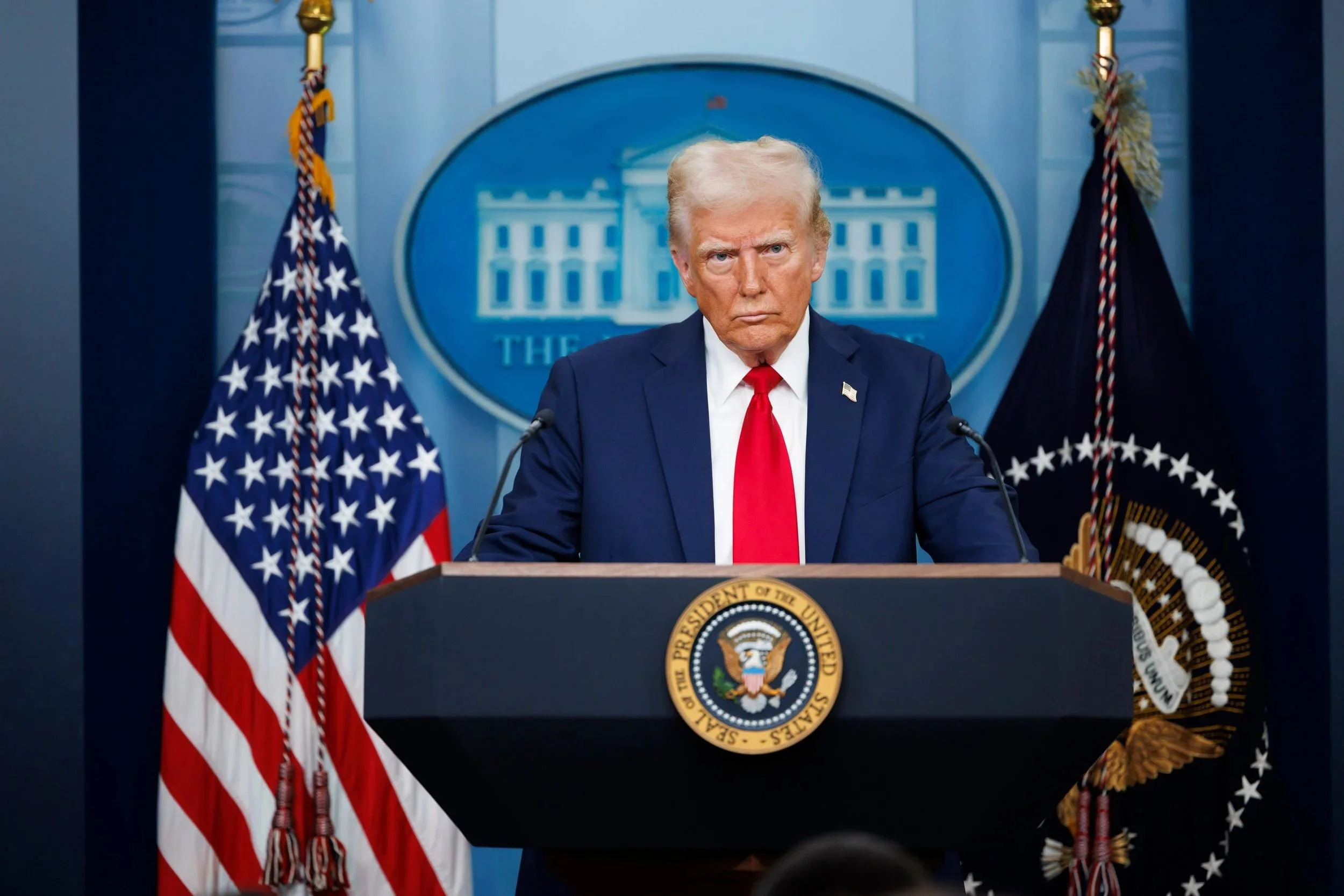
Updated November 5, 2026: Democrats won control of both the House of Representatives and the Senate in the November 3 midterm elections, according to the Associated Press and Reuters, delivering a major setback to President Donald Trump. Trump remains in office, and the newly elected Congress is scheduled to begin work on January 3, 2027. The pre-election polling and outcome scenarios below are retained as background and should not be read as forecasts after the vote.
By NewsVista Global | Originally published October 29, 2026 | Updated November 5, 2026
What the result changes: Reuters reported that Democrats secured at least 54 Senate seats and gained 30 or more House seats, while a small number of races remained undecided at the time of its report. Control of both chambers gives Democrats committee leadership and stronger oversight powers, and the Senate majority can block many presidential nominees. It does not remove Trump from office or give Democrats a veto-proof majority: the president retains veto authority, and Senate rules remain relevant to ordinary legislation. The new Congress is due to convene in January 2027. Sources: Reuters, November 4, 2026 | Associated Press, November 4, 2026.
The United States is approaching an important political moment. On November 3, Americans will vote in the 2026 midterm elections, a contest that could reshape the balance of power in Washington during the final two years of President Donald Trump’s second term.
Trump himself is not on the ballot. Instead, voters will decide who controls Congress, including the House of Representatives and the Senate. That decision will influence how easily the president can advance legislation, negotiate government spending and secure approval for key appointments.
The election is also becoming a broader public assessment of the administration’s record. For many voters, the central questions are practical: Are household expenses becoming more manageable? Is the economy delivering the promised benefits? How should immigration be handled? And what role should Congress play in checking presidential power?
Recent polling and campaign developments show a competitive political environment, with economic dissatisfaction creating challenges for Republicans and Democrats attempting to turn that dissatisfaction into electoral gains. However, national polls cannot determine the outcome of individual races, and the final balance of power will depend on results across numerous states and congressional districts.
1. Why the 2026 Midterm Elections Matter
Midterm elections take place halfway through a US president’s four-year term. Unlike presidential elections, they do not determine who occupies the White House. Instead, they decide the composition of Congress and can significantly influence the president’s ability to govern.
All 435 seats in the House of Representatives are being contested, along with 35 Senate seats, including special elections, according to the current election schedule.
Republicans enter the election controlling both chambers. Their majorities are narrow, making a relatively small number of competitive races important to the national outcome.
According to Reuters’ October 25 analysis, Democrats need a net gain of four seats in both chambers to take control under the congressional balance described in that report.
The implications extend beyond party leadership. Congress plays a central role in passing federal legislation, approving spending and conducting oversight of the executive branch.
If Republicans retain control of both chambers, Trump would continue working with a Congress led by his own party. If Democrats take control of one or both chambers, negotiations could become more difficult and congressional scrutiny of the administration could intensify.
Neither result would automatically end the president’s authority. The consequences would depend on the size of the majorities, individual lawmakers’ positions and the legislation under consideration.
Sources: Reuters — What You Need to Know About the 2026 US Midterm Elections | Ballotpedia — 2026 Congressional Elections
2. The Economy and Cost of Living Are Central to the Campaign
Economic pressure has become one of the defining issues of the election campaign.
For households, the economy is not simply a question of national growth figures. It is also about the price of groceries, gasoline, housing, healthcare and other everyday necessities.
A Reuters/Ipsos poll published on October 26 found that 32% of respondents approved of Trump’s job performance. In the same survey, registered voters preferred Democratic congressional candidates over Republican candidates by 47% to 36% on the national generic ballot question.
These figures offer a snapshot of public opinion, not a forecast of the final seat count. The survey’s national results do not capture all the local factors that determine congressional races.
A separate AP-NORC survey, conducted October 8–12 and published October 15, found that 85% of voters considered the economy one of the most important issues when deciding how to vote, while 84% said the same about the cost of living.
These findings suggest that economic concerns extend across party lines.
For Trump and Republican candidates, the challenge is to persuade voters that their policies will improve household finances and economic conditions. Democrats, meanwhile, are emphasizing affordability and promising to hold the administration accountable.
The election will test how voters assess these competing arguments.
Sources: Reuters/Ipsos polling report | AP-NORC survey
3. Immigration Remains a Major Political Divide
Immigration is another important issue shaping the election.
The Trump administration has made stricter immigration enforcement a central part of its agenda. Supporters argue that tougher enforcement is necessary to secure the border and uphold immigration laws. Critics have raised concerns about enforcement tactics, their humanitarian consequences and the treatment of immigrant communities.
These disagreements matter politically because immigration affects border communities, employers, workers, families and local public services in different ways.
Republican candidates are seeking support by emphasizing border security and enforcement. Democrats have highlighted concerns about the administration’s approach while presenting their own proposals for immigration policy.
Public opinion is not uniform. Some voters prioritize stricter enforcement, while others place greater emphasis on humanitarian protections, legal immigration pathways or the economic contribution of immigrant workers.
The outcome of the election will influence congressional debate over immigration legislation, funding and oversight. However, control of Congress alone will not determine every immigration decision, because the executive branch retains significant authority to implement existing laws.
4. Trump’s Approval Rating and the Republican Campaign
Trump has placed himself prominently in the closing stage of the campaign, holding rallies and supporting Republican candidates.
Reuters reported on October 17 that Trump was questioning aspects of the Republican midterm strategy, including campaign spending, redistricting efforts and candidate selection, according to people familiar with internal discussions. The White House rejected the characterization of the internal situation described in that report.
Trump’s personal involvement reflects the importance of his political standing to the Republican campaign.
For supporters, his leadership remains a reason to back Republican candidates. Other voters are evaluating his administration more critically, particularly over living costs and foreign policy.
His approval rating provides one measure of that public mood, but it does not tell the whole story. Voters may disapprove of a president while still supporting their local congressional candidate. Others may favour the president’s policies but have concerns about specific candidates or local issues.
Turnout will also matter. A party’s national support is not enough by itself to determine which candidates win in closely contested districts and states.
Source: Reuters — Trump Questions Midterm Strategy as Republicans Face Competitive Races
5. What Do the Polls Say?
National polling indicates that Democrats have an advantage in the generic congressional ballot, although the size of that advantage varies between surveys.
The October 26 Reuters/Ipsos poll placed Democratic candidates at 47% and Republican candidates at 36% among registered voters asked which party’s congressional candidate they would support.
A separate NPR/PBS News/Marist poll, based on likely voters surveyed October 19–20, reported support of 52% for Democratic candidates and 44% for Republican candidates.
These surveys use different samples and methodologies, so their figures should not be treated as directly interchangeable.
More importantly, a national generic ballot is not a direct prediction of congressional control. House elections take place in individual districts, while Senate elections are determined state by state. Candidate quality, local concerns, turnout and the geographic distribution of votes can all affect the results.
The Senate presents a particularly complex contest because its seats are elected statewide and the map of seats being contested differs from the House map.
The responsible conclusion is that polling shows meaningful public dissatisfaction with the administration, but the final congressional outcome remains uncertain.
Sources: Reuters/Ipsos | NPR/PBS News/Marist Poll
6. Three Possible Outcomes—and What Each Could Mean
The election could produce several different balances of power. These are scenarios, not predictions of which party will win.
Scenario One: Republicans Retain Both Chambers
If Republicans retain control of the House and Senate, Trump would continue to work with a Congress controlled by his party.
That arrangement could make it easier to advance shared legislative priorities and confirm nominees. However, narrow majorities would still require party unity, and disagreements among Republicans could complicate negotiations.
The result would also be interpreted politically as a continuation of Republican control, although individual races could produce different local messages.
Scenario Two: Democrats Win the House but Republicans Retain the Senate
A divided Congress would create a different governing environment.
A Democratic House majority could use committee leadership, hearings and subpoenas to scrutinize the administration. Democrats could also advance bills reflecting their priorities, although Senate Republicans could block many of those proposals.
Trump would retain his presidential veto and substantial executive authority. The change would therefore increase oversight and political bargaining rather than automatically transfer executive power to Democrats.
Budget negotiations, government funding and the federal debt limit could become important areas of disagreement.
Scenario Three: Democrats Win Both Chambers
If Democrats take control of both the House and Senate, they would gain greater influence over the congressional agenda, committee leadership and oversight.
They could seek to advance legislation on healthcare costs, affordability and other priorities, while examining administration policies through congressional investigations.
However, unified Democratic control of Congress would not give the party control of the presidency. Trump would remain president and retain veto authority. Many bills would still face procedural hurdles in the Senate, including the filibuster for legislation subject to that rule.
Major policy changes would therefore depend on the size of the Democratic majorities, the legislation proposed and whether enough votes could be secured.
Source: Reuters — The Midterm Outcomes That Could Shape Trump’s Final Two Years
7. Could the Election Affect the Economy and Financial Markets?
The election could influence economic policy, but its effects would depend on the results and subsequent negotiations.
Congressional control matters for taxation, federal spending, government funding and the debt ceiling. A divided government could make agreements more difficult, while narrow majorities in either chamber could create uncertainty over whether legislation can pass.
Businesses and investors may also monitor the election for signs of future changes in trade policy, regulation and government spending.
Tariffs are another issue attracting attention. The administration’s trade policies have been part of the wider economic debate, with supporters arguing that tariffs can protect domestic industries and critics warning that import costs can be passed on to businesses and consumers.
The election will not automatically reverse or confirm every existing policy. Some decisions depend on executive authority, others require legislation, and some may face legal challenges.
For ordinary Americans, the practical questions will remain whether prices become more manageable, employment conditions remain stable and access to essential services improves.
A congressional election can change the political environment in which those issues are addressed, but it cannot guarantee an immediate improvement in household finances.
8. What Happens After November 3?
The election is only the first stage of the transition to the next Congress.
Results will be counted and certified under state procedures. Close contests could require recounts or legal proceedings, depending on state law and the circumstances of individual races.
The newly elected members of Congress are scheduled to begin their terms on January 3, 2027.
Between Election Day and the start of the new Congress, attention will turn to leadership contests, committee assignments and the priorities each party intends to pursue.
If control changes, the transition could also influence how lawmakers approach government funding, the federal debt limit and other major legislative deadlines in 2027.
For Trump, the final two years of his term could involve a different balance of cooperation, negotiation and oversight depending on the election results.
Pre-Election Watchlist: Issues That Shaped the Campaign
The following issues were central to the closing days of the campaign and help explain the result:
- Economic messaging: Whether candidates can convince voters that their proposals address living costs and household financial pressure.
- Competitive races: The results in closely contested House districts and Senate contests will determine the balance of power.
- Turnout: Which groups participate, and how votes are distributed across states and districts, may matter as much as national polling.
- Immigration and foreign policy: These issues could influence voters alongside the economy, even though their importance varies across communities.
- Election administration: State election officials will oversee voting, counting and certification under the applicable rules.
No single poll, rally or campaign statement can establish the final outcome. The results will emerge from thousands of local decisions made by voters across the country.
Conclusion: A Defining Moment for Trump’s Second Term
The November 3, 2026 midterms resulted in Democrats winning control of both chambers of Congress, creating a new political balance for the final two years of Donald Trump’s presidency.
Voters’ concerns about the Iran war, inflation, living costs, tariffs and questions about government conduct featured prominently in reporting on the result. National polling and exit-poll findings provide context, but they should not be treated as a substitute for certified state results.
Democratic control gives the party greater influence over congressional committees, oversight and the legislative agenda. Trump nevertheless remains president, retains veto authority and continues to exercise executive powers. The practical impact will depend on the new majorities, Senate rules and the ability of lawmakers to negotiate.
For American voters, the election has reset the congressional balance and placed responsibility on the incoming majority to deliver on its campaign priorities.
For the rest of the world, the result will also be worth watching because US decisions on trade, foreign policy, immigration and public spending have consequences beyond its borders.
NewsVista Global will continue to follow the incoming Congress, its oversight agenda and the implications for US policy and international relations.
Reporting note: Poll figures in this article are tied to the dates and populations specified in the cited surveys. Election scenarios are conditional explanations, not predictions of the result.
Election Day update — November 3, 2026: Voting is taking place across the United States today. In a Reuters/Ipsos survey conducted October 29–November 2, President Donald Trump’s job approval stood at 32%. On the generic congressional ballot among likely voters, 52% said they would vote for or lean toward the Democratic candidate in their district, compared with 44% for the Republican candidate. The poll included 1,765 adults; its margin of sampling error for the full adult sample was ±2.4 percentage points, while subgroup estimates have larger uncertainty. These national figures are not election results and cannot predict the outcome in individual House districts or Senate races. Official results will depend on votes counted and certified by state and local authorities. Source: Ipsos/Reuters, November 2, 2026.