NewsVista Global | November 7, 2026
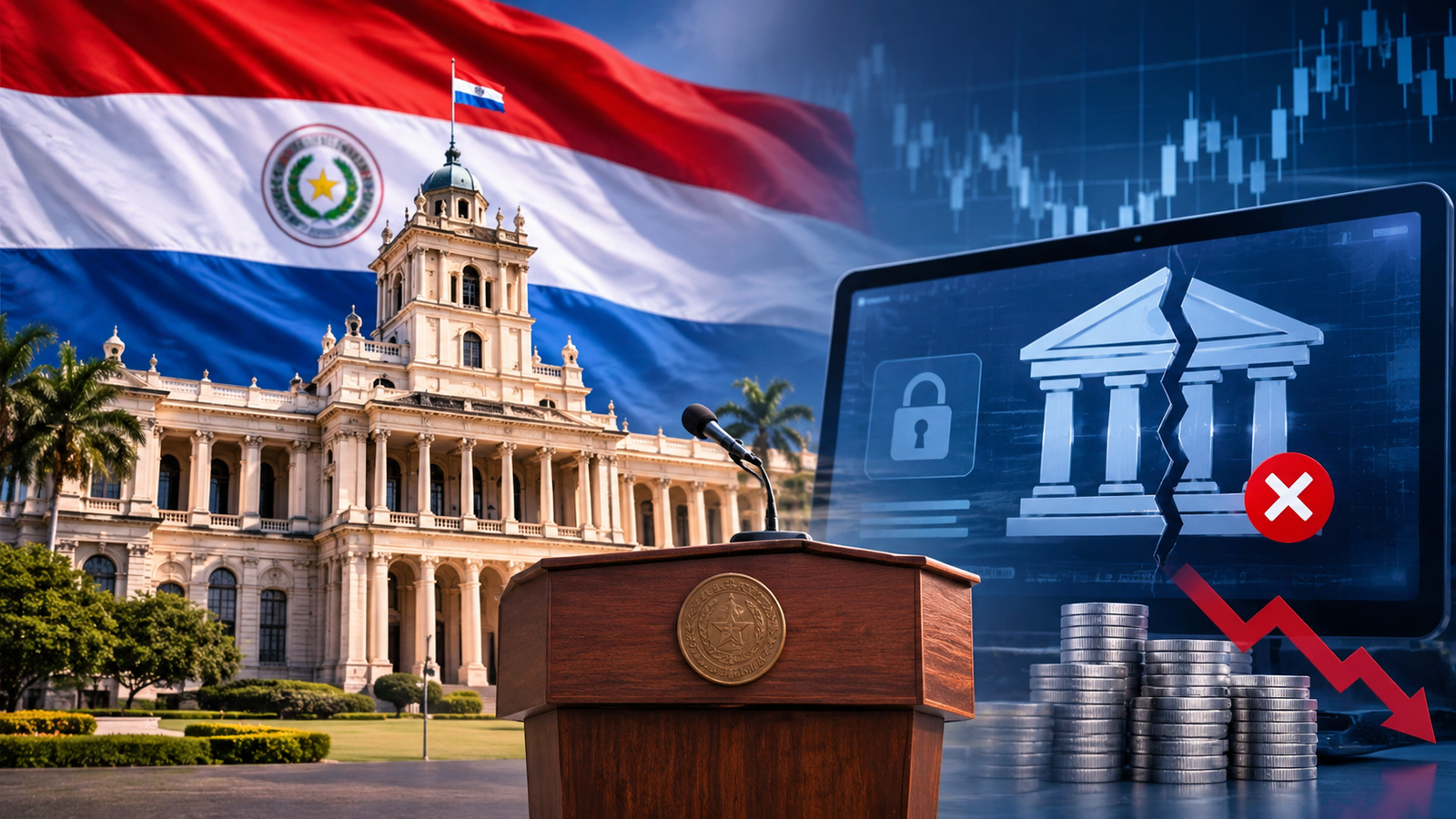
Paraguay has entered an abrupt change of leadership after Congress removed President Santiago Peña and swore in Vice President Pedro Alliana, as the collapse of digital lender Ueno Bank continues to reverberate through the country’s political and financial institutions.
The transition followed a fast-moving impeachment process in which lawmakers accused Peña of misconduct connected to the banking crisis. The allegations are subject to investigation and should not be treated as proven criminal findings. The immediate challenge for the new administration is to restore confidence among depositors, clarify what happened at the lender and protect the wider financial system from further disruption.
What happened in Paraguay
The Chamber of Deputies approved an impeachment request against Peña on November 5, according to the Paraguayan lower house. The Senate then completed the process on November 6, declaring him guilty of poor performance in office and removing him. The Senate’s official account says the vote was unanimous among senators present.
Pedro Alliana, who had served as vice president, was sworn in as president on November 6. Paraguay’s Chamber of Deputies confirmed the succession, while the Senate said Alliana would complete the 2023–2028 presidential term.
The rapid sequence followed Peña’s attempt to resign as pressure mounted over the failure of Ueno Bank. Rather than ending the matter through resignation, lawmakers proceeded with impeachment. The Associated Press reported that authorities placed Peña under house arrest after his removal as prosecutors pursued allegations connected to the bank crisis. Peña has denied wrongdoing, according to AP reporting.
How the Ueno Bank collapse triggered a national crisis
Ueno Bank’s failure became a national issue because the lender had a large customer base and links to public funds. The Associated Press reported that the bank served around 2.9 million customers—more than 60% of Paraguay’s adults—and held about $800 million in public deposits. The intervention left many customers temporarily unable to access savings and payments, adding pressure on households and businesses.
AP reported that regulators intervened after identifying serious weaknesses that included risky insider lending, inadequate documentation and improperly recorded assets. The bank’s capital had fallen below the legal minimum, according to the report. Those findings describe the regulatory concerns reported by AP; responsibility for any criminal conduct remains a matter for prosecutors and courts.
The impact reached beyond individual depositors. A banking failure of this scale can interrupt salary payments, household spending and business cash flow, while also testing confidence in supervision and deposit-protection arrangements. AP reported that the central bank said deposit insurance covers about 97% of customers, and that repayment arrangements had begun for some smaller depositors. The speed and completeness of access to funds remain central issues for affected customers.
What lawmakers alleged—and what is still being investigated
Paraguay’s official congressional account said the impeachment case was linked to the financial and political crisis surrounding Ueno Bank, including questions about conflicts of interest and the handling of the institution. AP reported that investigators were examining the bank’s regulatory oversight, public deposits and alleged influence over decisions affecting the lender.
These are allegations and investigative questions, not a final judicial determination. Peña’s removal from office does not itself establish criminal guilt. The new administration and the courts will face pressure to provide evidence-based answers, protect due process and explain how public money and customer deposits were exposed to risk.
Why the leadership change matters for the economy
Paraguay’s political transition comes at a moment when restoring trust in financial institutions is essential. Customers need clear information about how and when they can access their money. Businesses need predictable payment services, and investors will be watching whether the authorities can manage the bank’s resolution without creating wider instability.
Alliana’s government will also need to demonstrate that the investigation can proceed independently. A transparent review of regulatory decisions, related-party lending and the handling of public deposits could help establish accountability. Any attempt to shield influential figures or rush past unresolved questions could deepen public distrust.
The crisis is also a reminder that the failure of a fast-growing digital lender can have consequences beyond the technology or banking sector. When a financial institution becomes deeply integrated into everyday payments and public-sector deposits, weaknesses in governance and supervision can quickly become a national economic and political problem.
What happens next
- Depositor access: Authorities will need to communicate clear repayment and account-access arrangements, including how deposit protection applies to different customers.
- Criminal and regulatory investigations: Prosecutors and regulators must establish the facts behind the bank’s collapse and assess any alleged misconduct through due process.
- Banking confidence: The central bank’s handling of the lender’s resolution will be watched for signs that other institutions remain stable and properly supervised.
- Government credibility: Alliana’s administration will be judged on whether it can separate political accountability from the independent legal process.
Key facts
| Development | Verified detail |
|---|---|
| Impeachment vote in lower house | Approved on November 5, 2026, with 78 votes, according to Paraguay’s Chamber of Deputies. |
| Senate decision | Peña was removed on November 6; the Senate described the vote as unanimous among senators present. |
| New president | Pedro Alliana was sworn in on November 6 to complete the 2023–2028 term. |
| Ueno Bank customers | About 2.9 million customers, or more than 60% of adults, according to AP. |
| Public deposits | About $800 million held by the bank, according to AP. |
Sources
- Reuters — Paraguay’s Alliana sworn in as president after Peña impeachment, November 6, 2026.
- Associated Press — Ousted Paraguayan president placed under house arrest after bank collapse, November 2026.
- Paraguay Chamber of Deputies — Pedro Alliana assumes the presidency, November 6, 2026.
- Paraguay Senate — Senate removes Santiago Peña through impeachment, November 6, 2026.
- Paraguay Chamber of Deputies — Lower house approves impeachment request against Santiago Peña, November 5, 2026.
Editorial note: Allegations against former President Santiago Peña and other individuals are attributed to lawmakers, prosecutors or media reports. They are not presented as proven criminal findings. Customer and deposit figures are attributed to AP reporting and should be checked against subsequent official resolution updates before publication.