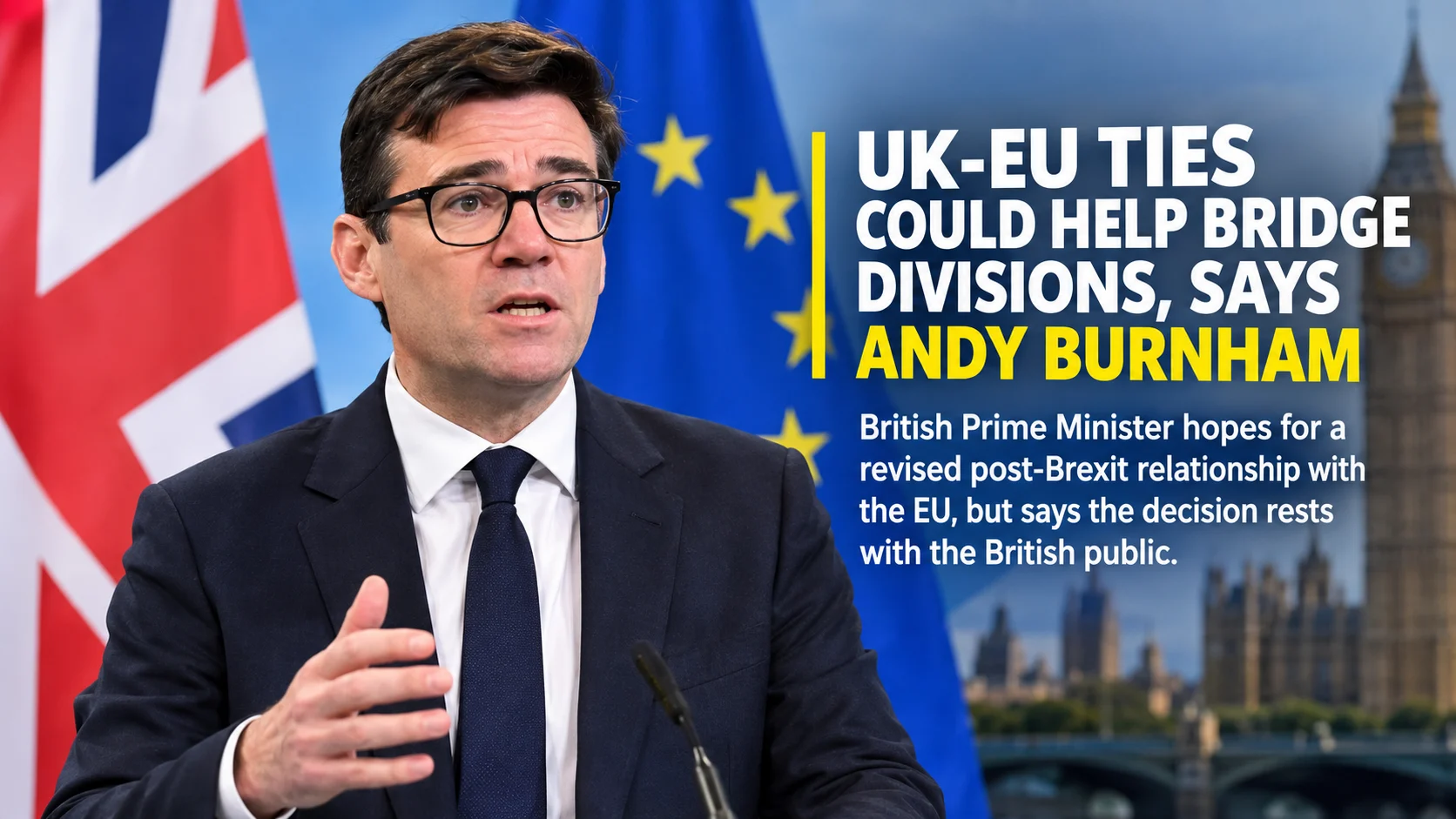
Andy Burnham backs a debate on closer UK-EU ties, hopes Britain may rejoin the bloc in his lifetime and rules out an early election.
Thank you for reading this post, don't forget to subscribe!Andy Burnham Says Closer EU Ties Could Help Heal Britain’s Post-Brexit Divisions
British Prime Minister Andy Burnham has called for an open discussion about the United Kingdom’s long-term relationship with the European Union, arguing that a revised post-Brexit arrangement could help address national divisions and improve Britain’s economic prospects.
Burnham has expressed hope that the UK could rejoin the EU within his lifetime. However, he has ruled out rejoining the bloc during the current parliamentary term and insisted that the country’s future relationship with Europe must reflect the wishes of the British public.
The prime minister has also dismissed speculation about an early general election, saying his immediate priority is governing the country rather than preparing for another election campaign.
His comments have brought Brexit back into the centre of Britain’s political debate, nearly a decade after the 2016 referendum in which voters chose to leave the European Union.
Burnham Wants a Fresh Debate on Britain’s Relationship With the EU
Burnham has argued that Britain should reconsider its approach to the European Union instead of treating the current post-Brexit arrangement as the final word on the country’s future.
His position reflects growing political debate over whether closer cooperation with the bloc could help Britain address economic challenges, improve trade relations and rebuild ties with its European neighbours.
In earlier remarks, Burnham said Brexit had done more harm than good and called for a clear assessment of the options available for Britain’s long-term relationship with Europe.
However, discussing closer ties does not mean that the government has committed to rejoining the EU. The precise shape of any future arrangement remains a political question, and major changes would require further negotiations and public support.
UK Rejoining the EU Is Not on the Immediate Agenda
Although Burnham has said he hopes Britain will return to the European Union within his lifetime, he has made clear that rejoining will not happen during the current parliamentary term.
He has also stressed that he does not intend to move ahead of public opinion on such a consequential decision.
The distinction is important: the prime minister is advocating a debate about Britain’s long-term options rather than announcing an immediate policy reversal.
Potential arrangements could involve closer cooperation in areas such as trade, food standards, emissions trading and opportunities for young people to live, work or study across borders. Full EU membership, however, would raise much broader questions about immigration, regulation, sovereignty and the UK’s future obligations.
Brexit Divisions Remain a Political Challenge
The 2016 referendum exposed deep divisions in British society over national sovereignty, immigration, trade and the country’s relationship with Europe.
The official result was 51.9% for Leave and 48.1% for Remain. The narrow margin reflected a country divided over the economic and political consequences of EU membership.
Supporters of closer European ties argue that reducing trade barriers and improving cooperation could benefit businesses and strengthen economic relationships. Critics, meanwhile, warn that reopening the Brexit debate could revive political tensions and undermine the decision made by voters.
Burnham’s approach seeks to reopen the discussion while maintaining that any future decision must have democratic legitimacy.
The political challenge will be to establish whether a new relationship with the EU can attract broad public support without reigniting the divisions that shaped the referendum.
Immigration and Freedom of Movement Complicate the Debate
Immigration is likely to remain one of the most contentious issues in any discussion about Britain’s future relationship with the EU.
Burnham has called for an evidence-based debate about freedom of movement, suggesting that patterns of migration have changed since Brexit. He has also acknowledged that the previous system presented significant challenges.
Returning to EU membership or pursuing closer integration could require difficult choices about migration rules and the extent to which Britain would follow European regulations.
Downing Street has stressed that discussions about possible options should not be mistaken for settled government policy. The government has not committed to restoring freedom of movement or rejoining the bloc.
Any proposal would therefore need to address public concerns about immigration alongside potential benefits for trade, employment, education and economic growth.
No Early General Election Planned
Burnham has also rejected speculation that he intends to call an early general election to secure a mandate for his European policy ambitions.
Speaking to ITV’s Good Morning Britain on October 26, he said there was no election coming “any time soon” and indicated that his focus remained on governing.
The comments suggest that voters should not expect an immediate election campaign centred on EU membership.
Instead, the government is preparing to pursue nearer-term discussions with European leaders, with a UK-EU summit scheduled for November 20, 2026, according to recent reporting.
That meeting is expected to focus on practical areas of cooperation, while the broader question of Britain’s long-term relationship with the bloc remains open.
What Could Closer UK-EU Relations Mean for Britain?
A closer relationship with the EU could have implications for British businesses, workers, students and consumers. The potential effects would depend on the specific agreements negotiated and the obligations Britain accepted in return.
Possible areas of cooperation include:
- Trade and business: Reducing unnecessary barriers could make it easier for some businesses to trade across borders.
- Education and youth opportunities: New arrangements could expand opportunities for young people to study, work or gain experience in Europe.
- Immigration policy: Any change to mobility arrangements would require careful consideration of border management and public concerns.
- Economic cooperation: Greater alignment in selected areas could improve coordination between British and European industries.
- Political relations: A more stable partnership could strengthen cooperation on shared economic and security challenges.
These are potential outcomes, not guaranteed benefits. Their scale would depend on the terms of any agreement, the response from EU institutions and the political choices made by the British government.
What Happens Next?
The immediate focus is the planned UK-EU summit on November 20, where leaders are expected to discuss practical steps towards improving relations.
Burnham’s longer-term ambitions face several hurdles, including political opposition, disagreements over immigration and regulation, and the need to secure public support.
For now, the prime minister has ruled out rejoining the EU during the current parliamentary term and has rejected the prospect of an early general election.
His message is that Britain should examine its options without prejudging the outcome.
Conclusion
Andy Burnham’s call to reconsider Britain’s post-Brexit relationship with the European Union marks a significant moment in the country’s continuing debate over Europe.
His hope that the UK could rejoin the bloc within his lifetime signals an openness to a more ambitious future relationship, but it is not an announcement of an immediate return to membership.
With no early election planned and no settled government decision on rejoining, the next phase will centre on practical negotiations, public debate and the political choices that follow.
Whether closer EU ties can help bridge Britain’s divisions will ultimately depend on the agreements reached and whether the public believes they offer a better future for the country.
British Prime Minister Andy Burnham says closer ties with the EU could help address Britain’s post-Brexit divisions, while ruling out rejoining during the current parliamentary term
H1: Andy Burnham Says Closer EU Ties Could Help Heal Britain’s Post-Brexit Divisions
- H2: Burnham Wants a Fresh Debate on Britain’s Relationship With the EU
- H2: UK Rejoining the EU Is Not on the Immediate Agenda
- H2: Brexit Divisions Remain a Political Challenge
- H2: Immigration and Freedom of Movement Complicate the Debate
- H2: No Early General Election Planned
- H2: What Could Closer UK-EU Relations Mean for Britain?
- H2: What Happens Next?
- H2: Conclusion
Brexit: What Happened in the 2016 UK Referendum?
UK-EU Trade Relations After Brexit
How Brexit Changed Immigration Rules in Britain
What Is the European Union and How Does Membership Work?
Original News Sources and References
1. Reuters — UK PM Burnham says election not coming ‘any time soon’
2. The Guardian — Andy Burnham promises ‘serious dialogue’ over UK’s relationship with EU
Editorial Verification Note
The article is based on recent reporting from Reuters, ITV News and The Guardian. The central claims—that Burnham wants a debate on closer EU relations, has ruled out rejoining during the current parliamentary term, and has dismissed an imminent election—are supported by the linked reports.
The November 20, 2026, summit date is reported by news outlets and should be rechecked before publication in case arrangements change. The article does not present EU re-entry as settled government policy or treat potential economic benefits as guaranteed.