
NewsVista Desk | Mumbai / New York / London
Thank you for reading this post, don't forget to subscribe!The global market environment was busy today. A number of significant Asian business moves made their mark on the worldwide commercial environment. Leading the pack were events in India where Jio Financial Services Limited (JFSL), controlled by billionaire Mukesh Ambani, and the US-based banking giant Bank of America Corporation (BofA) came to an important agreement.
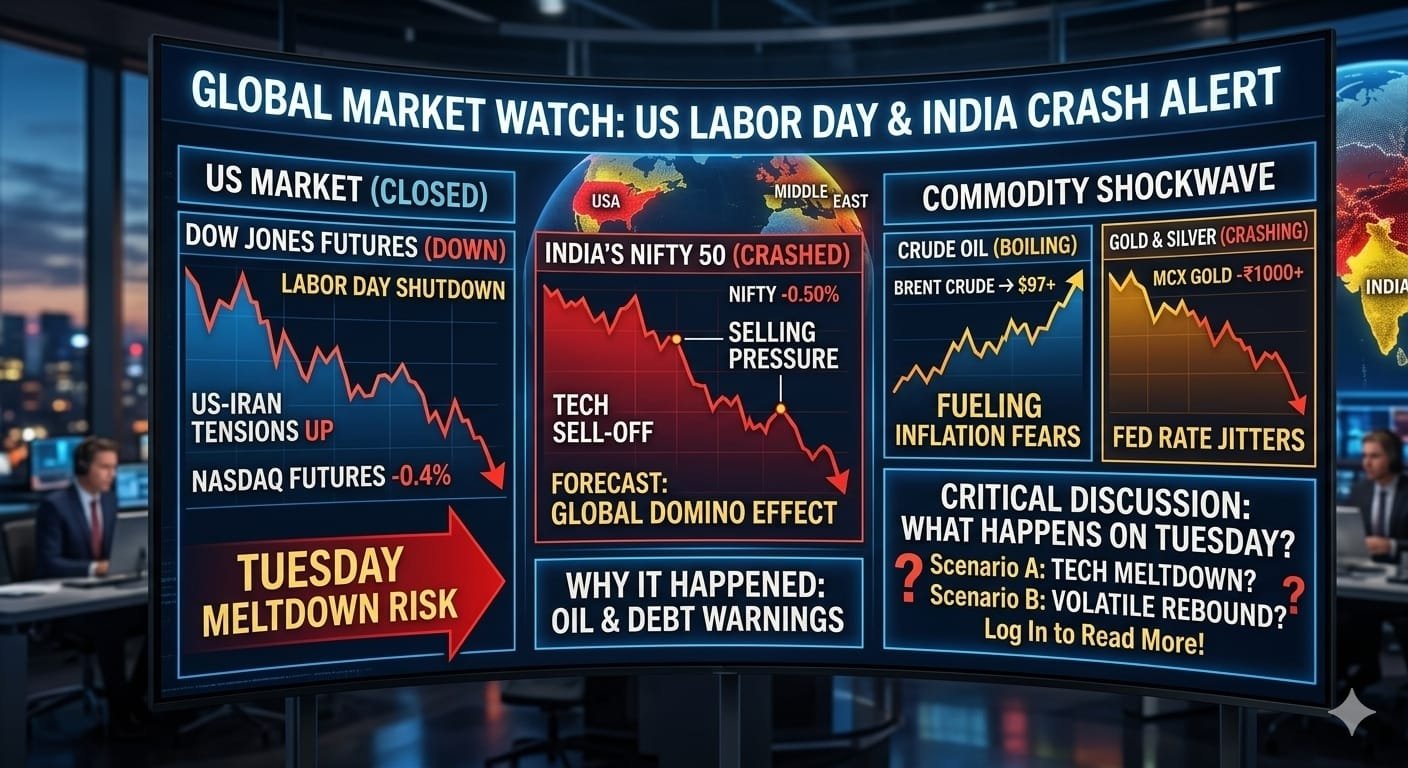
International stock and commodity markets remained tense and wary as well ahead of major rate decisions of the world’s leading central banks after the US Labor Day holiday. With Brent crude near $97 a barrel, global investors are watching closely for any signal about changing interest rates by major central banks and trade tensions between emerging and developed markets.
1. India Focus: Jio Financial & Bank of America Sign $1.9B Deal
In one of the year’s biggest cross-border financial deals, Bank of America has agreed to buy up to a 49.9% stake in Jio Credit Limited (non-banking finance unit of Jio Financial Services) in a deal worth about ₹18,268 crore ($1.92 billion USD).
Key Strategic Highlights of the Joint Venture:
* Capital & Expertise Injection: Jio Credit Limited—which has rapidly built an Asset Under Management (AUM) exceeding ₹30,000 crore (about $3.2 billion USD)—will utilise Bank of America’s global risk management frameworks, governance expertise, and institutional technology.
* Equal Board Representation: As a result of the transaction, Jio Credit’s Board of Directors will be comprised of an equal number of members from JFSL and Bank of America, with operational management retained by the current executive team
* Expanding Digital Credit Access: The joint venture will seek to bridge the gap between traditional credit structures and modern digital accessibility in secured retail assets, commercial loans and supply chain finance in India.
Industry Take: “This alliance reflects growing global confidence in India’s digital credit ecosystem. The combination of Jio’s extensive digital distribution network with that of the balance sheet expertise of Bank of America, represents a formidable force in the arena of emerging market consumer finance.”
2. World Markets: Wall Street Reopening & Brent Crude at $97
While hot on the heels of the booming deal-making in Asia, the European and Western financial markets face ongoing macroeconomic challenges. After the recent closure of the US Labor Day, the markets around the globe are readjusting their portfolios in preparation of the upcoming releases of key economic figures from the US Federal Reserve and the European Central Bank
Important Global Trends To Watch:
Crude oil has been volatile and is currently trading at $97 a barrel, due to Middle East supply issues and geopolitical tensions, which will continue to put inflationary pressure on energy-importing economies around Asia and Europe.
Technology stocks in the US and Banks across the globe are likely to see increased volatility as money managers readjust their portfolios according to yield curve movements and cross-border mergers and acquisitions.
Foreign Institutional Investors (FIIs) are continuing to keep a close eye on currency movements against the Dollar Index, and have started to shift towards emerging market equities such as in India.
3. Market Indicators & Technical Snapshot
| Benchmark / Asset | Current / Range | Primary Driver | Market Sentiment |
| Jio Financial (JFSL) | Strategic Surge | $1.9 Billion BofA Stake Acquisition | Strongly Bullish |
| Brent Crude Oil | $92.00 – $98.50 | Supply Constraints & Geopolitics | Highly Volatile |
| Nifty 50 Index | 23,780 – 24,200 | FII Flows & Crude Oil Pressure | Cautious / Sideways |
| US S&P 500 Futures | Pre-Market Watch | Post-Labor Day Portfolio Rebalancing | Neutral to Caut |
Conclusion: What Lies Ahead for Global Investors?
The combination of high-profile international partnerships (e.g., Jio-Bank of America) and looming macroeconomic headwinds suggests that strategic corporate expansion will continue regardless of the overall macroeconomic environment.
Now that the US markets have reopened, and ahead of international central banks’ next policy meetings, investors should maintain a balanced posture, seeking out high-quality companies benefitting from long-term capital investment trends, but hedging against declines in commodities.