
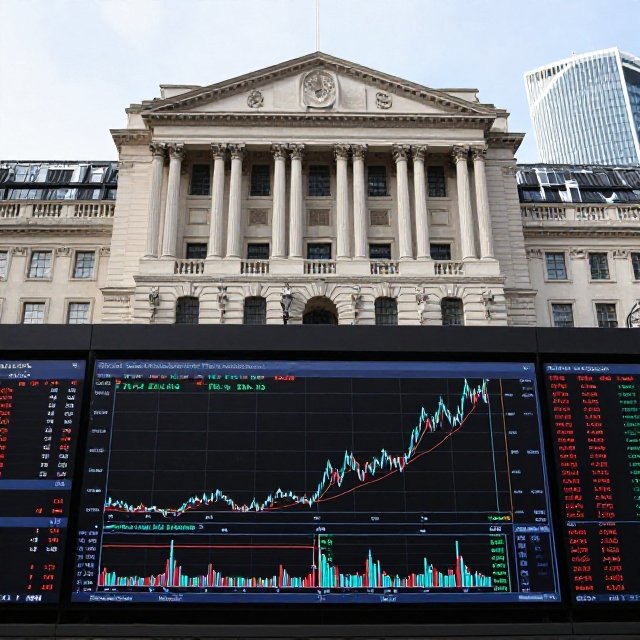
LONDON, November 16, 2026 — The yield on the United Kingdom’s 10-year government bond rose to 5.36% on Monday, keeping long-term borrowing costs elevated as investors assess inflation, government financing needs and the outlook for interest rates. Trading Economics reported the 10-year yield was up 0.02 percentage points from the previous session.
The move is important because gilt yields help shape the cost at which the UK government borrows and influence pricing across parts of the financial system. They are not the same as the Bank of England’s policy rate, and a rise in yields does not automatically mean that the central bank has announced another rate increase.
What the latest yield figure shows
The 5.36% reading is a market quote for the 10-year government bond maturity, not a borrowing rate offered to every household or company. Bank of England data provide the official daily framework for tracking UK government bond yield curves, while market platforms also publish current benchmark quotes.
The distinction between maturities matters. Short-term government yields are more sensitive to expectations for near-term central-bank policy, while longer-term yields also reflect views about future inflation, economic growth, government borrowing and the compensation investors demand for holding debt over a longer period.
Why gilt yields matter to the government
When investors demand higher yields to buy newly issued government debt, the state may face a higher cost when refinancing or adding to its borrowing. The effect does not reprice every outstanding bond immediately, because existing fixed-rate gilts continue to pay the coupons set when they were issued. The impact builds as debt matures and new borrowing is raised.
Higher yields can also affect the government’s fiscal choices. More money spent on debt interest can leave less room for public services, investment or tax reductions, although the precise effect depends on the maturity profile of the debt and the wider budget position.
Possible effects on mortgages, businesses and investors
Gilt yields are one of several benchmarks used by lenders and investors when setting prices. A sustained increase can put upward pressure on some fixed-rate borrowing costs, including mortgages and business loans, but the relationship is not one-to-one. Lenders also consider swap rates, funding costs, credit risk, competition and expectations for the Bank of England.
For bond investors, yields and prices generally move in opposite directions. When market yields rise, the price of an existing fixed-coupon bond usually falls so that its return is more competitive with newly issued debt. The size of the price change depends partly on the bond’s maturity and duration.
Inflation and public finances remain key questions
Investors are weighing several forces rather than reacting to one number. Inflation expectations, global bond-market moves, the supply of government debt and confidence in the fiscal outlook can all influence gilt demand. The UK’s Office for Budget Responsibility said in its October 2026 economic and fiscal outlook that market pricing for Bank Rate and gilt yields had increased significantly compared with its March forecast.
That backdrop helps explain why elevated yields matter for the public finances. It does not, by itself, prove that investors have lost confidence in the UK or that a fiscal crisis is imminent. Such conclusions would require broader evidence, including auction demand, sterling movements, credit conditions and the government’s updated fiscal plans.
What markets will watch next
Investors will monitor upcoming inflation and growth data, government borrowing announcements, gilt auctions and signals from the Bank of England. The direction of US and other major bond markets may also influence UK yields because international investors compare returns across countries.
The key point for households and businesses is that a 5.36% 10-year gilt yield is a market benchmark, not a direct forecast of every loan rate. If yields remain elevated, however, the pressure can gradually feed into public borrowing costs and wider financial conditions.
Sources
- Trading Economics — United Kingdom 10-Year Bond Yield (November 16, 2026 market data)
- Bank of England — Yield curves and government bond yield data
- UK Office for Budget Responsibility — Economic and Fiscal Outlook, October 2026
Editorial note: Market yields change during trading and quoted values may differ by provider and observation time. This article is for news and information, not investment advice.