
By Ankit Jain | NewsVista Global
Governments in several countries are asking households to think ahead: keep enough food, drinking water, medicines and basic supplies to manage for at least a few days if normal services are disrupted. The advice has renewed public questions about why officials are talking about 72 hours, a week or even 10 days of supplies — and whether it means a major war is approaching.
The short answer is more practical than dramatic. Emergency planning is designed for many kinds of disruption, from severe weather and floods to power cuts, transport problems and interruptions to water, communications or shop deliveries. It is not, by itself, a warning that a world war is imminent.
Why are governments recommending emergency supplies?
Modern daily life depends on systems that are easy to take for granted. Electricity supports heating, refrigeration, mobile networks and payment systems. Roads and supply chains bring food and medicines to shops. Water networks and digital services keep homes and businesses functioning. A serious local emergency — or several smaller problems occurring together — can interrupt more than one service at a time.
That is why official preparedness guidance covers a range of risks rather than one predicted event:
- Extreme weather and natural hazards: floods, storms, heavy snowfall, heatwaves and earthquakes can close roads, damage infrastructure or prevent deliveries.
- Power and communications outages: a prolonged electricity cut can affect refrigeration, heating, phone charging, card payments and access to information.
- Cyber incidents and technical failures: disruption to digital systems can affect services people use every day. This is a preparedness scenario, not proof that a particular attack is about to happen.
- Conflict and wider geopolitical instability: international tensions can make governments more attentive to resilience and supply-chain risks, but household stock guidance should not be interpreted as a prediction of war.
- Public-health or other local emergencies: illness, contamination incidents or evacuation orders can make it harder to shop or leave home normally.
What are different countries actually advising?
There is no single worldwide rule that every household must store exactly 3 to 10 days of supplies. Recommendations vary by country, local risks and the government agency issuing the guidance. Official examples show why the numbers often appear in public discussion:
- United Kingdom: the UK Government’s “Be Ready” campaign, described in a 22 October 2026 parliamentary statement, encourages households to keep three days of bottled water and non-perishable food at home. The British Red Cross also explains how to prepare for up to 72 hours of disruption.
- Germany: the Federal Office of Civil Protection and Disaster Assistance (BBK) says households should aim, if possible, to be able to provide for themselves for 10 days. It also stresses that a three-day supply is a useful start and that people can build up gradually.
- Sweden: the national public information service advises households to plan to manage for at least one week without electricity, water or the ability to buy food from shops.
- Norway: the Directorate for Civil Protection (DSB) recommends being prepared to manage for one week, with food, water, medicines, lighting, communications and other essentials.
- Finland: the national Suomi.fi preparedness guidance recommends keeping home supplies for at least three days, including water, food, medicines and other necessities.
These examples are not identical policies. They reflect different national approaches, and the advice can be updated. Readers should follow the latest instructions from their own local authorities rather than assume that another country’s checklist applies everywhere.
Does this mean World War 3 is coming?
No such conclusion follows from emergency-supply guidance. Governments prepare for events that may never happen because the cost of modest preparation is usually lower than the cost of being caught without essentials during a disruption. A household that has drinking water, basic food, medicines and a torch is better placed to handle a storm or power cut too.
Geopolitical tensions are one part of the wider risk picture, but they are not the only reason for preparedness plans. The official guidance cited here focuses on resilience during emergencies; it does not announce that a global conflict is imminent. Claims that the 3–10 day advice is a secret countdown to war go beyond what these sources say.
What could an emergency mean for an ordinary household?
The first effects may be surprisingly ordinary. A family could find that the supermarket is closed, card payments are unavailable, a lift is not working, roads are flooded or mobile service is unreliable. Someone who depends on daily medication may face a more serious problem than someone who simply cannot stream a film or charge a second device.
Preparation is therefore not just about storing tins. It is about thinking through the needs of children, older relatives, people with disabilities, pets and anyone who relies on regular medication or powered medical equipment. A plan for contacting family members and knowing where to get reliable local updates can be as important as the supplies themselves.
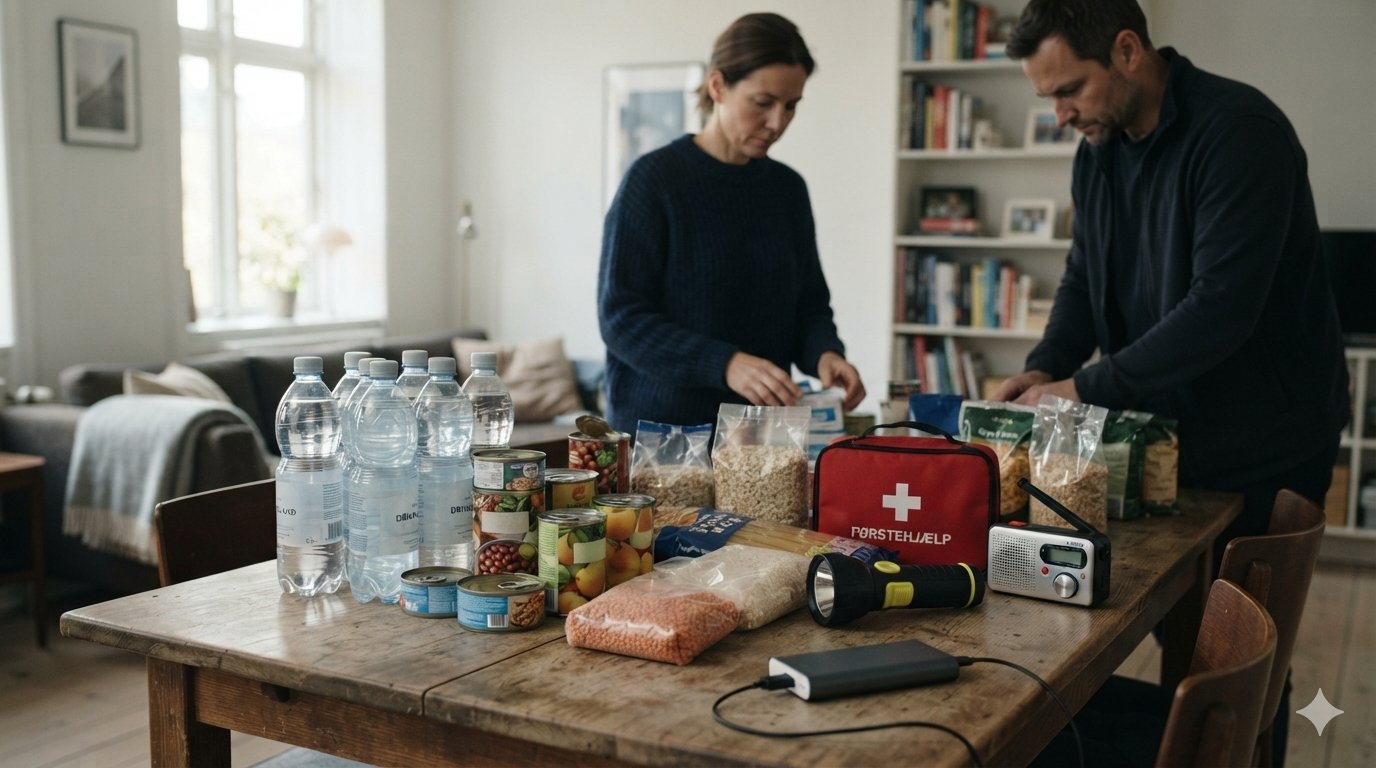
A practical 72-hour household checklist
You do not need to buy everything at once or turn your home into a warehouse. Start by checking what you already have, then fill the most important gaps gradually. Adapt quantities to the number of people in your home, your climate, health needs and local official advice.
- Drinking water: store enough safe drinking water for each person. As a planning reference, UK Red Cross guidance says government advice is around 2.5–3 litres per person per day for drinking; needs can vary with heat, health and activity.
- Food: keep familiar, shelf-stable food that can be eaten with little or no cooking, and remember a manual can opener if needed.
- Medicines and first aid: keep essential prescribed medicines, copies of prescriptions where useful, basic first-aid items and necessary medical supplies.
- Light and power: have a torch, spare batteries and a charged power bank. Use candles carefully because of fire risk.
- Information: consider a battery-powered or wind-up radio, keep important phone numbers on paper and know which official alert channels operate in your area.
- Hygiene: include soap, hand sanitiser, wet wipes, toilet paper, sanitary products, nappies and other household essentials as needed.
- Money and documents: keep some cash and copies of important documents in a safe, accessible place in case digital payments or access to records is interrupted.
- Household and pets: plan for babies, older people, people with disabilities and pets. Include their food, water and essential supplies.
How should people prepare without overspending?
The most sensible approach is gradual. Check cupboards before shopping, choose food your family already eats, rotate older items into normal meals and replace them before they expire. If space or money is limited, begin with drinking water, essential medication, a few days of food, a torch and a way to receive official information.
Do not use outdoor camping stoves, barbecues or generators inside a home, garage or enclosed space. They can cause carbon-monoxide poisoning or fire. Follow the manufacturer’s safety instructions and local emergency guidance.
What about households in India?
People in India should tailor preparedness to the risks where they live. In one area, the priority may be monsoon flooding; elsewhere it may be heatwaves, cyclones, earthquakes, water interruptions or extended power cuts. A compact household kit with safe drinking water, essential medicines, dry food, a torch, a charged power bank and copies of key contacts can be useful without suggesting that India has adopted the same national 3–10 day rule as some other countries.
During an active emergency, follow instructions from local administration, police, disaster-management authorities and recognised weather or health agencies. Do not rely on forwarded messages or unverified social-media claims about shortages, attacks or evacuation orders.
The bigger picture: preparedness, not panic
The message behind these recommendations is straightforward: essential services can be disrupted, and households can take reasonable steps to cope while emergency teams restore them. Three days may be a practical starting point; some authorities encourage a longer reserve where possible. The right plan is one that fits a household’s real needs and can be maintained safely.
There is no need for panic buying or dramatic predictions. A few carefully chosen supplies, a family contact plan and reliable information are more useful than fear. Preparedness is not about expecting the worst every day — it is about making an unexpected day easier to manage.
Sources and further guidance
- UK Parliament: Cabinet Office statement on the “Be Ready” campaign, 22 October 2026
- British Red Cross: Prepare your household for 72 hours during an emergency
- Germany’s BBK: Planning ahead for crises and disasters
- Sweden: Home preparedness
- Norway’s DSB: One-week self-preparedness guidance
- Finland: Home emergency supplies and preparedness guidance
Editorial note: Preparedness recommendations differ by country and may change. This article explains general guidance and is not a substitute for instructions issued by local emergency authorities.
Related NewsVista coverage: See our official education and emergency information portal guide for more resources and verification advice.