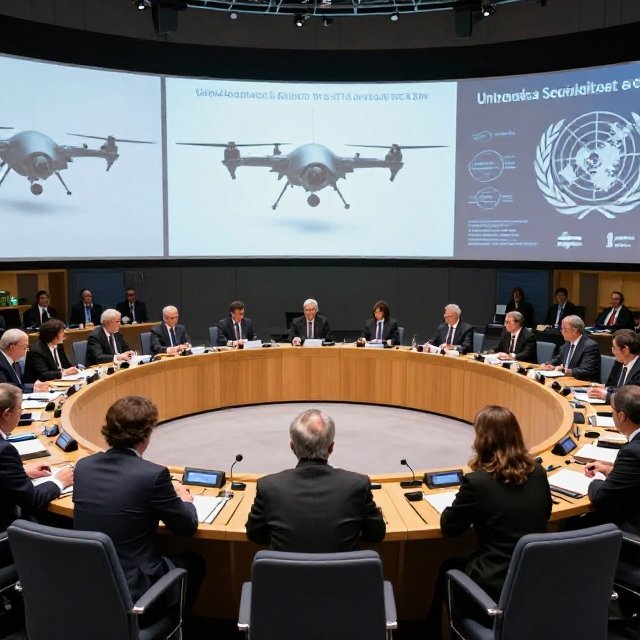

Foreign ministers from the world’s major economies have gathered in Atlanta, Georgia, for a two-day G20 meeting on October 30–31, 2026, as disagreements over international conflicts, trade and energy security test cooperation between major powers.
The meeting, chaired by US Secretary of State Marco Rubio, brings together representatives from countries including the United States, China, Russia, India, Japan and European economies. It is taking place ahead of the G20 Leaders’ Summit scheduled for December 14–15 in Miami, Florida.
The discussions come at a time when geopolitical tensions are increasingly affecting international trade, energy markets and supply chains.
Wars and Trade Disputes Complicate the Talks
The Russia-Ukraine war, the conflict involving Iran, US tariffs and tensions in the South China Sea are among the major issues creating divisions among G20 members.
According to the Associated Press, there appears to be little prospect of agreement on several of the most contentious issues. Russia’s participation, in particular, has raised concerns among some Western countries because of Moscow’s continuing war against Ukraine.
Russian Foreign Minister Sergey Lavrov is attending the meeting, while China is represented by a deputy foreign minister.
The disagreements demonstrate the difficulty of reaching a common position when countries have different security priorities and economic interests.
Energy Security and Shipping Routes Take Centre Stage
One of Washington’s stated priorities is cooperation on freedom of navigation, particularly in strategically important waterways such as the Strait of Hormuz, the Red Sea, the Black Sea and the South China Sea.
These routes are important for international shipping and the movement of energy supplies and other essential goods.
Disruptions can increase transport costs, create uncertainty for businesses and put pressure on energy markets. For countries dependent on imported oil, gas and other raw materials, the security of these routes has direct economic importance.
The US administration has also identified food security and supply chains for critical minerals as subjects for discussion.
Why India’s Participation Matters
India’s External Affairs Minister S. Jaishankar is attending the Atlanta meeting, where energy security and supply-chain resilience are particularly relevant to India’s economic interests.
India is a major importer of crude oil and relies on international routes for energy and other essential commodities. Developments around the Strait of Hormuz and other shipping corridors can therefore affect its energy costs and trade flows.
India is also expected to participate in a Quad foreign ministers’ meeting on the sidelines of the G20 gathering, alongside representatives from the United States, Japan and Australia.
For New Delhi, the discussions provide an opportunity to engage with major economies on maritime security, economic cooperation and regional developments.
Russia’s Presence and South Africa’s Absence Raise Questions
Russia’s participation has become one of the politically sensitive aspects of the meeting. Some G20 members have expressed concern about inviting a Russian delegation while the war in Ukraine continues.
South Africa, a founding G20 member, is also absent from the Atlanta gathering. South African officials told the Associated Press that the country’s nonparticipation was not voluntary.
The situation has raised questions about representation and the ability of the G20 to maintain a unified approach to international economic and political challenges.
These issues could influence the tone of discussions ahead of the December leaders’ summit.
What Is at Stake for the Global Economy?
Although the G20 is not a military alliance, its members represent major parts of the global economy. Their decisions and cooperation can influence trade, investment, energy policy and responses to international economic disruptions.
A lack of agreement does not necessarily mean that the meeting will produce no practical results. Countries may still cooperate on specific issues, even when they disagree over wider geopolitical questions.
For businesses and consumers, the most immediate concerns include energy prices, shipping costs, access to essential materials and the stability of international supply chains.
The Road to the December G20 Summit
The Atlanta meeting is an important step towards the G20 Leaders’ Summit scheduled for December 14–15 in Miami.
The foreign ministers’ discussions are expected to help shape the issues that leaders will address later this year. Whether members can identify areas of practical cooperation despite their disagreements will be an important measure of the meeting’s outcome.
For now, the gathering highlights a central challenge in international diplomacy: major economies remain economically connected, even as their political and security differences deepen.
The outcome of the discussions may offer clues about how far countries are willing to cooperate on shared economic challenges without resolving their wider geopolitical disputes.
Latest Update: G20 Foreign Ministers’ Meeting Ends Without Joint Communique
The G20 Foreign Ministers’ Meeting in Atlanta, held on October 30–31, 2026, ended without agreement on several major international security and geopolitical issues. Instead of a joint communique, the United States planned to issue a chairman’s statement summarising the discussions.
The disagreements included Russia’s war against Ukraine, the conflict involving Iran, US trade policies and tensions in the South China Sea. The divisions also became visible when US Secretary of State Marco Rubio cancelled the traditional group photograph after several European diplomats objected to appearing alongside Russian Foreign Minister Sergey Lavrov.
The meeting also highlighted differences over freedom of navigation and the security of important maritime routes, including the Strait of Hormuz, the Red Sea and the Black Sea. Polish Foreign Minister Radosław Sikorski called for a rapid Black Sea ceasefire to allow safe passage for grain shipments from Ukraine and Russia.
Despite the disagreements, participants discussed the need to continue cooperation ahead of the G20 Leaders’ Summit scheduled for December 14–15, 2026, in Miami, Florida.
Update status: Information available as of October 31, 2026. The chairman’s statement and subsequent diplomatic developments may provide further details.
Sources :- APNews, Reuters, Publicnow
Sources
- Associated Press — G20 diplomats face deep divisions ahead of Atlanta meeting, October 30, 2026.
- Reuters — G20 foreign ministers face divisions over Ukraine, the Middle East and global economic issues, October 30, 2026.
- DD India — Jaishankar attends G20 ministerial talks in Atlanta, October 30, 2026.
- US Department of State — G20 Foreign Ministers’ Meeting schedule and priorities.
This report reflects developments available on October 30, 2026. The meeting is scheduled to continue through October 31; its final outcomes were not yet available at the time of writing.