TL;DR: Major developments
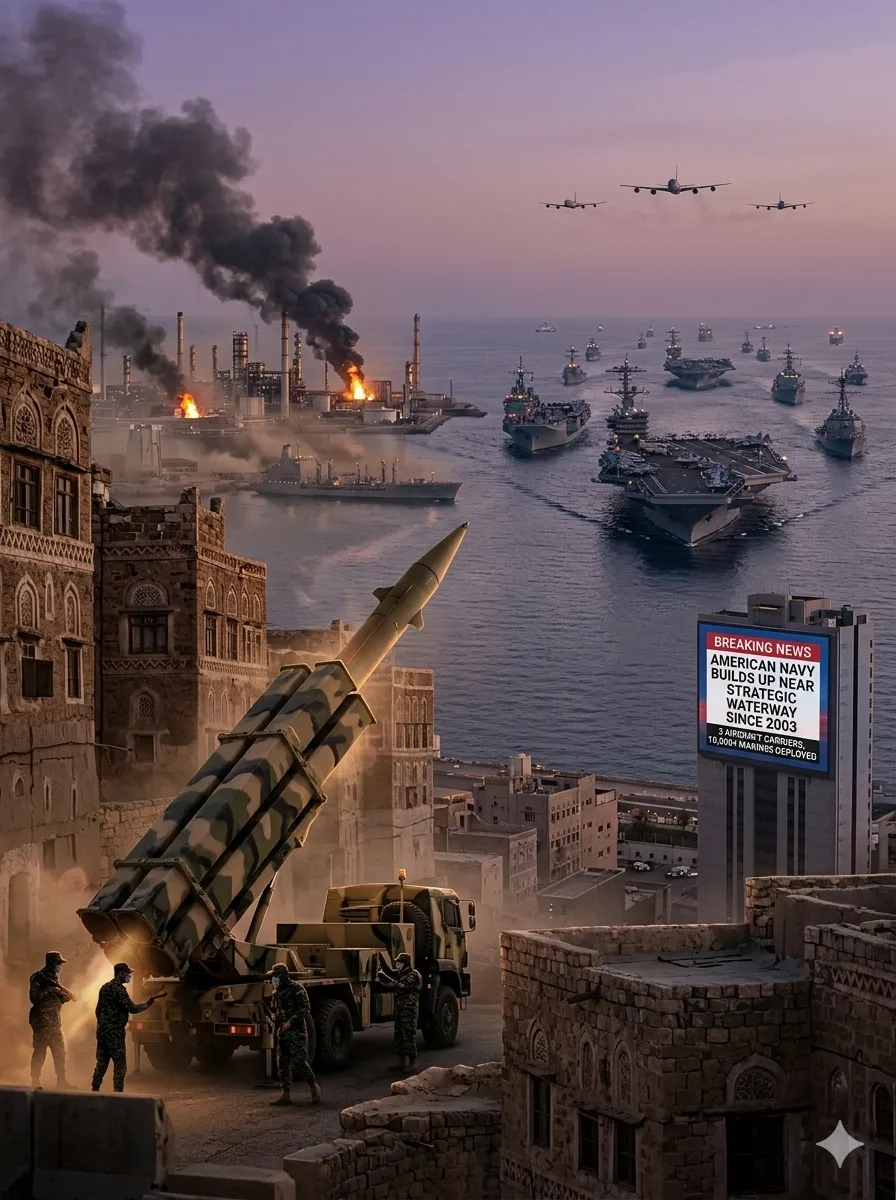
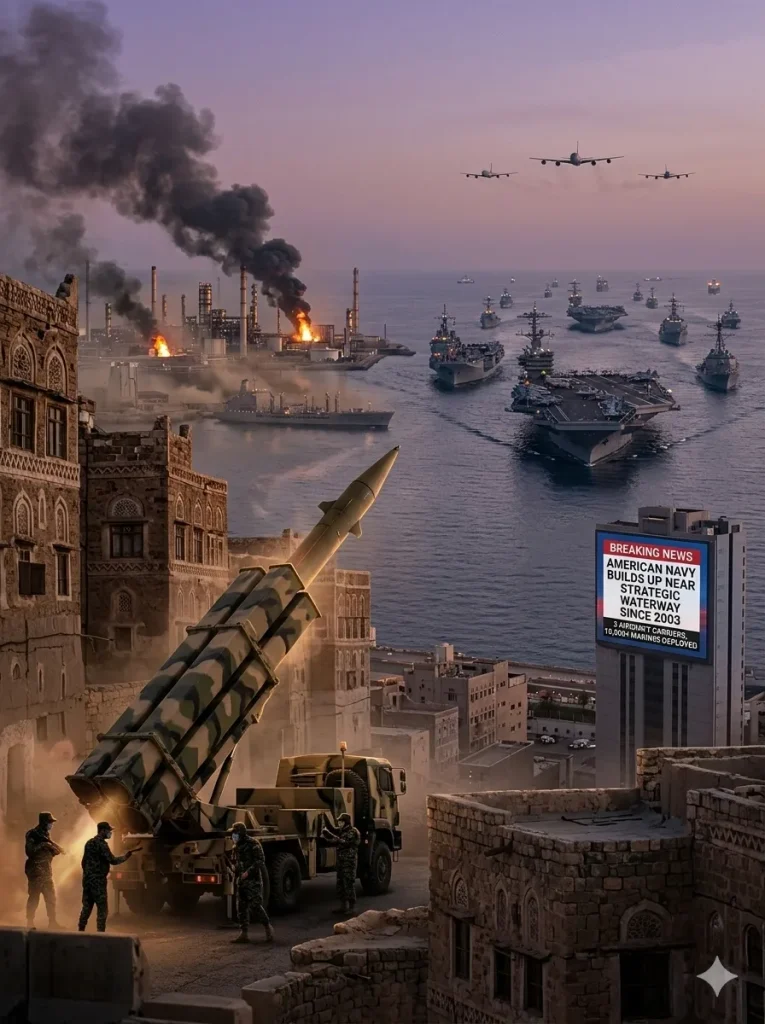
Thank you for reading this post, don't forget to subscribe!- Attacks on Refineries: A large coordinated attack using drones and ballistic missiles hit strategic petrochemical facilities in Al-Jubail, Saudi Arabia.
- Aden Escalation: Heavy missile attack by Ansarallah (Houthi forces) on Saudi-backed coalition military installations in Aden.
- U.S. Navy Buildup: U.S. has sent 3 Aircraft Carrier Strike Groups and over 10,000 Marines in response, the biggest regional buildup since 2003.
- Global Risk: Increased tensions in the Strait of Hormuz region present an immediate risk to global shipping and crude oil prices.
Middle East Crisis: Is This The Biggest U.S. Military Build-Up Since The 2003 Iraq War?
The Middle East is a geopolitical powder keg right now. Recent intelligence updates circulated through strategic security channels including the IRGC Cyber Wing suggest tensions have reached an explosive level. The region is bracing for a possible escalation on multiple fronts, from devastating missile strikes on industrial centers to an unprecedented mobilization of the U.S. Navy.
Here’s a look at three major developments shaking the region right now:
region now: Please
- Strike on Saudi Arabia Strategic Petrochemical Plants
Satellite images have confirmed major strikes on industrial targets deep inside Saudi Arabia.
- The Target: Highly strategic Oil Refineries and Petrochemical in Al-Jubail, Saudi Arabia.
- The Weaponry. A synchronized wave of long-range ballistic missiles and suicide drones pounded the infrastructure.
- The Culprits: The strike is being blamed on Yemeni forces, seen as a direct attack on the region’s energy infrastructure, and could lead to instability in the global oil markets.
- Saudi-backed forces hit massive missile strikes in Aden
The Ansarallah (Houthi forces) have taken the conflict to new fronts, firing a heavy barrage of ballistic missiles into southern Yemen.
- The Targeted Strikes: The targeted strikes hit the key port city of Aden.
- The Purpose: The operation was aimed at Saudi-backed coalition forces’ military bases and command centers and those of local proxies.
- Situation Now: The accuracy and magnitude of the strike has brought regional forces to the highest alert level, making the ongoing diplomatic truce efforts much harder.
- U.S. Responds with Historic Military Buildup
The United States has sent a large armada of naval ships to the region to help counter the growing chaos and protect the global shipping lanes. Defense analysts call it the largest U.S. military mobilization in the region since the 1991 Gulf War and the 2003 Iraq War.
The U.S. deployment, with maximum security on the Strait of Hormuz and the Sea of Oman, is made up of:
- 3 Aircraft Carrier Strike Groups: Deploying gigantic floating airbases to rule the skies.
- Dozens of Warships: Different classes of destructive guided-missile destroyers and cruisers
- 10,000+ U.S. Marines: Specialized amphibious warships and highly trained rapid response forces.
- Strategic Aerial Refueling Fleet: Dozens of massive tanker aircraft stationed at regional bases to keep fighter jets airborne indefinitely..
Source: Based on open-source intelligence (OSINT) reports and updates shared by regional security channels on Telegram (including IRGC-affiliated media networks)