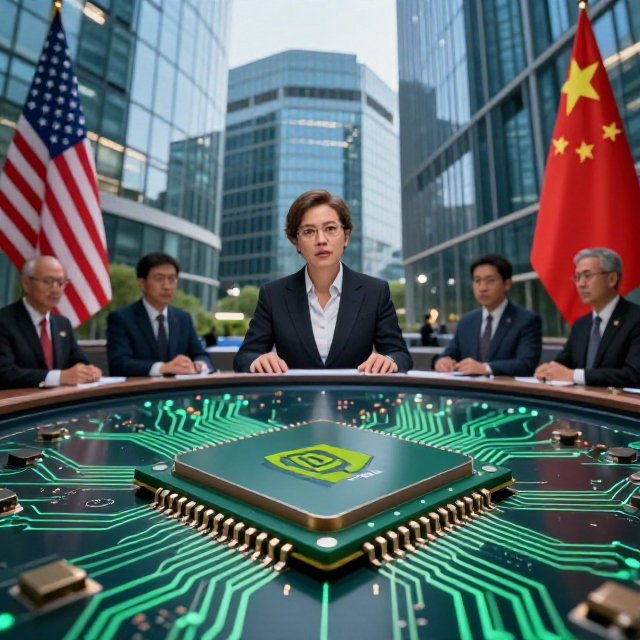
Nvidia is facing growing political, corporate-governance and investor scrutiny as reports about chief executive Jensen Huang’s personal associations intersect with longstanding US concerns over advanced artificial-intelligence chip exports to China. The issue has become more than a question about one executive: it touches on export controls, board oversight and the strategic importance of AI hardware.
Why Nvidia is under pressure
Reuters reported on November 11 that the controversy had drawn attention from lawmakers, investors and Nvidia’s board. The reports concern Huang’s relationship with a Chinese business executive whom US intelligence sources have alleged was linked to Chinese intelligence. Those claims remain allegations and should not be treated as established findings.
Nvidia has said it is examining whether its chief executive was targeted by a foreign intelligence effort. The company’s board has engaged outside counsel, according to Reuters reporting. The company has also indicated that it has no reason to believe Nvidia secrets or national security information were compromised.
The bigger issue: advanced chips and China
Washington has spent years tightening controls on exports of advanced semiconductors and related technology to China, citing national-security concerns. Nvidia sits at the centre of the debate because its processors are widely used to train and run advanced AI systems.
Lawmakers are considering whether existing rules are sufficient to prevent restricted chips from reaching prohibited buyers or being diverted through intermediaries. The current controversy could add political momentum to proposals for stronger oversight, although no specific new law should be assumed to have passed on the basis of the reports cited here.
Why investors are watching
Nvidia’s valuation is closely tied to expectations for AI infrastructure spending and its ability to maintain leadership in high-performance chips. Any uncertainty around executive continuity, regulatory restrictions or access to major markets can influence investor sentiment.
At the same time, the allegations do not by themselves establish that company systems were compromised or that export rules were broken. The outcome of the board’s review and any official findings will matter more than speculation.
What happens next?
Investors and policymakers will be watching for the results of Nvidia’s independent review, responses from relevant US agencies and any concrete legislative proposals on chip exports. The case illustrates how corporate governance and national security are increasingly intertwined in the global AI race.
NewsVista Global Editorial Note: Allegations involving individuals and intelligence links are attributed to media reports and are not presented as proven facts. This article will be updated if Nvidia, US authorities or lawmakers release material new information.
Editorial review: Ankit Jain, NewsVista Global